

Being a woman pursuing science and engineering has not always been straightforward. For many girls, interest in math or technical subjects is met with subtle doubt, lowered expectations, or the feeling of standing alone in a room where few look like you. These moments can quietly chip away at confidence, even when curiosity and ability are strong. Gender stereotypes, often introduced early, can make STEM feel like unfamiliar or unwelcoming territory, shaping who feels encouraged to continue and who feels pushed aside.
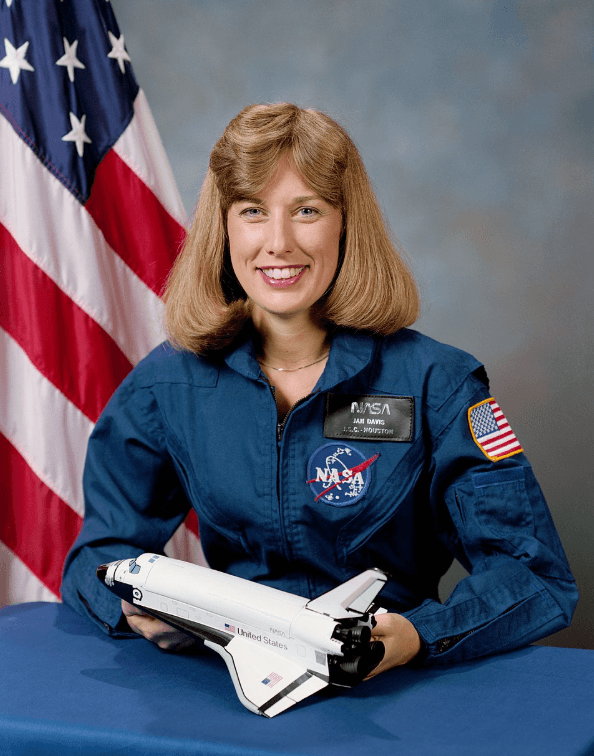
From a young age, Dr. Jan Davis was drawn to understanding how things work. Supported by teachers and mentors who recognized her potential, she followed her interests into engineering, even as she became increasingly aware of how few women shared that path. Rather than turning away, she pressed forward with determination, allowing curiosity, persistence, and a clear sense of purpose to guide her. That commitment would ultimately lead her to a career at NASA and beyond, opening doors not only for herself but for those who would follow.
Being a woman in a predominantly male environment can sometimes feel discouraging, especially when you find yourself as “the only girl in the class” or when exceeding the boys academically isn’t considered “cool.” One of the first obstacles women in STEM encounter is gender stereotyping. From early on, society often labels STEM fields as male-oriented and steers girls toward careers seen as more “suitable” for women. These stereotypes can undermine girls’ confidence and interest in math and science—even when their skills match or surpass those of boys. Consequently, fewer women select STEM majors in college, narrowing the stream of women entering STEM professions.
As a young girl, I was passionate about science and math. Luckily, I had parents and teachers who encouraged me and my interests. It wasn’t until I chose to study engineering in college that I realized how few women were in the field. Still, I pushed through the stereotypes because I was determined and persistent!
What helped me stay resilient was setting a clear goal for myself and staying dedicated to achieving it. I was determined to become an engineer and chose to disregard those who doubted a woman could excel in that role.
At work, I was fortunate to have supervisors and colleagues who supported me. I felt a need to prove myself as an engineer, and once I did, I was offered every chance to succeed. When I joined NASA in 1979, it coincided with the selection of the first Space Shuttle astronauts in 1978, which included Sally Ride and five other women. In 1980, two more women were chosen as astronauts. That’s when I set my sights on a new ambition—to become an astronaut myself. Even though the odds were against me, I believed it would be the ultimate job, and I knew I’d never achieve it if I didn’t at least try.
I committed myself to doing everything possible to increase my chances of becoming an astronaut. As John Maxwell says, “Without commitment, there can be no success.” My strategy included earning a Ph.D. degree, getting my private pilot’s license, and learning to scuba dive. As astronauts train for extra vehicular activity (EVA or spacewalks) in water tanks to simulate microgravity, support scuba divers are needed. By becoming a diver, I was able to assist astronauts during their training, and I sought their advice, which they generously provided.
After earning my pilot’s license and participating in NASA’s full-time study program to get my Ph.D., I applied for the next group of astronauts. That year, there were 5,000 applicants, and I was thrilled to be among the 128 interviewed in Houston. However, I wasn’t chosen that year—or the next. This was tough to handle, especially after all the effort I put into earning my Ph.D., which itself came with many challenges.
Whenever you strive for something—even small achievements—there will be challenges and resistance. Sometimes, the only thing that kept me moving forward was my clear goal and unwavering commitment to it. As David McNally puts it, “Commitment is the enemy of resistance, for it is the serious promise to press on, to get up, no matter how many times you are
knocked down.” If you truly want to reach a goal, you can’t fear failure. Personally, I took lessons from my disappointments and rejections and made the decision to keep trying rather than give up.
On my third attempt to become an astronaut, I was finally chosen! Achieving this dream took tremendous effort and dedication. After that, I set a new goal: to travel to space. This goal demanded even greater commitment, but the rewards were extraordinary. If I had never applied or had quit after early setbacks, I would have missed out on incredible experiences.
For many women, a fear of failure or a lack of confidence to persist can be common. Without proper mentorship and support, women might feel isolated or discouraged, making them more likely to leave STEM fields. By creating inclusive environments and providing support throughout their STEM journeys, we can open doors to more talent, diverse viewpoints, and innovation.


