

Six years ago, I wrote an article for the International Coalition of Girls' Schools titled No Doubt About It, We Need More Women in STEM. While progress has been made since then, the challenge remains. In that article, I highlighted five best practices for supporting girls in STEM. Today, I’m rearranging those priorities based on what we have learned over the past six years.
According to the National Science Board's 2026 Science & Engineering Indicators report, women comprised just 35% of the U.S. STEM workforce in 2023. Meanwhile, demand for STEM talent continues to accelerate. Between 2013 and 2023, the STEM workforce grew by 26%, compared with just 9% growth in non-STEM occupations. Looking ahead, STEM occupations are projected to add approximately 870,000 jobs between 2024 and 2034.
The question is no longer whether America needs more STEM talent. We do.
The question is where we will find it.
The answer is sitting in today's classrooms.
The answer is girls.
The Missing Link: Representation
Over the past decade, we have learned a great deal about how to engage girls in STEM. We know that girls benefit from inquiry-based learning, real-world problem solving, opportunities to take risks, and projects connected to meaningful social impact.
Yet despite these efforts, women remain significantly underrepresented in some of the fastest-growing STEM fields. In 2023, women earned approximately half of all science and engineering bachelor's degrees, but only 26% of engineering degrees and 23% of computer and information sciences degrees.
Why does this gap persist despite increased participation and educational support?
One important reason is that many girls still struggle to see themselves reflected in STEM careers.
For many girls, seeing is believing.
When girls rarely encounter female engineers, computer scientists, physicists, inventors, or entrepreneurs, STEM can feel like a world that belongs to someone else. Talent alone is not enough. Girls need encouragement. They need proof that women like them belong in STEM.
They need role models.
Why Role Models Matter
Role models do far more than inspire.
They make STEM careers visible and attainable. They help girls imagine possibilities for themselves. They normalize success in fields where women have historically been underrepresented. They demonstrate resilience when challenges arise and show that there are many paths into STEM.
A young girl who meets a software engineer may discover a career she never knew existed. A conversation with a microgravity scientist may spark an interest in space exploration. A mentor's story of overcoming obstacles may give a student the confidence to persevere through a difficult physics course.
Role models transform abstract possibilities into tangible futures.
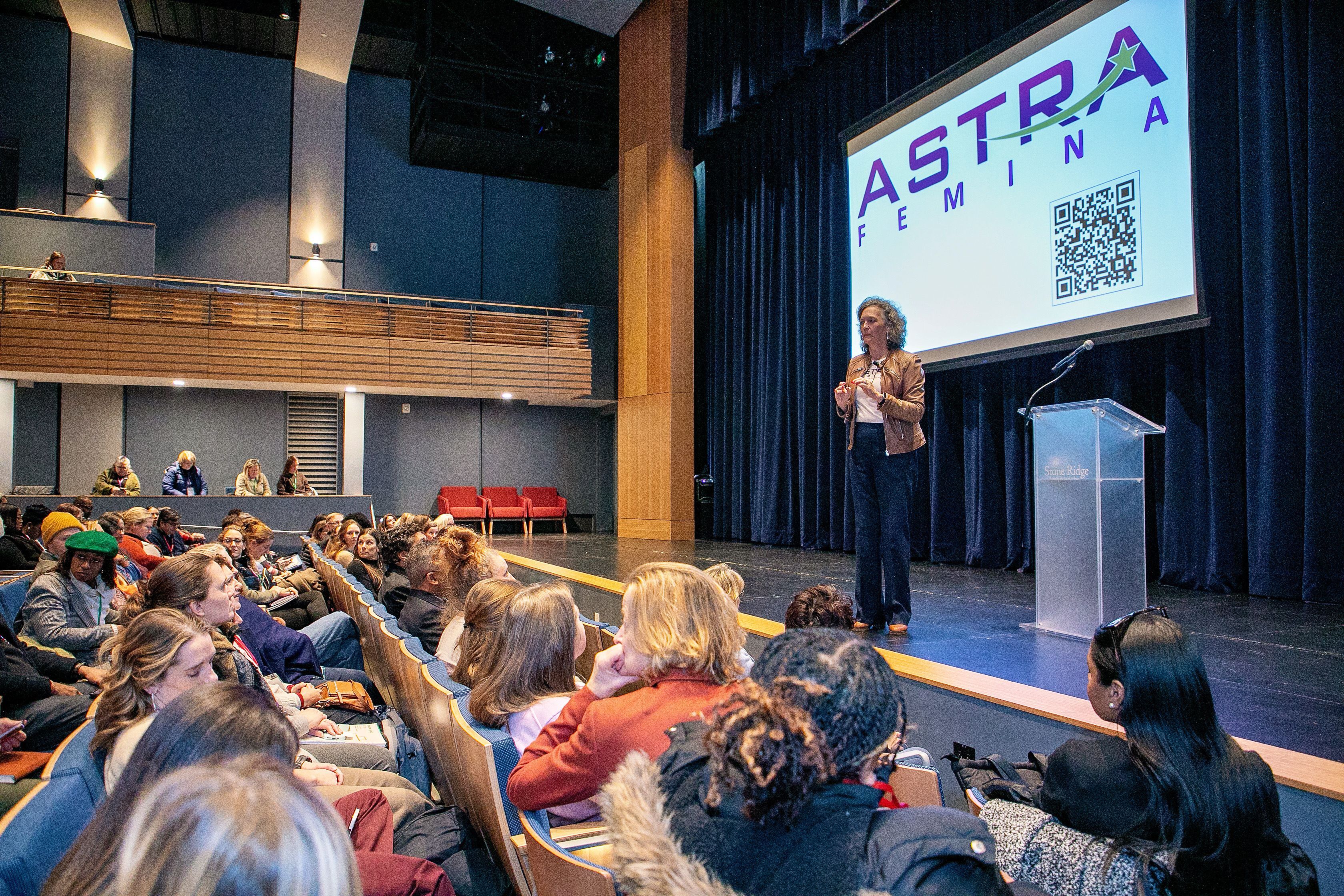
That is precisely the mission of AstraFemina.
By showcasing the stories, achievements, and journeys of women in STEM, AstraFemina helps girls see what is possible. Every keynote, interview, mentorship opportunity, and shared experience sends a powerful message:
"You belong here."
Start with Girls
The good news is that many educators and girls' schools have already developed effective strategies for nurturing girls' interest in STEM. These approaches remain as relevant today as they were six years ago. The difference is that I would now place role models at the top of the list:
- Connecting Girls with Role Models
This is the catalyst that strengthens every other practice.
Girls who take risks are more likely to persist when they know successful women have faced setbacks too. Girls engaged in STEM projects become more motivated when they can envision careers connected to their interests. Girls developing technical skills gain confidence when they see women using those same skills to solve important problems.
Role models are not an add-on to STEM education. They are a critical ingredient in helping girls imagine themselves as future scientists, engineers, innovators, and leaders.
- Taking Risks
Girls must learn that failure is not something to fear but an essential part of learning and innovation. As Girls Who Code founder Reshma Saujani reminds us, we must teach girls to be "brave, not perfect."
- Inquiry- and Project-Based Learning
Girls thrive when they can investigate meaningful questions, build solutions, and test ideas through hands-on experiences.
- Tying STEM Learning to a Higher Purpose
Many girls are motivated by understanding how STEM can improve lives and solve real-world problems. Connecting STEM learning to social impact helps students see its relevance and value.
- Building Confidence Through Skill Development
Developing spatial reasoning, design thinking, and technical skills early helps girls gain confidence and prepares them for future STEM opportunities.
Our Future Depends on It
America's need for STEM talent has never been greater. Yet we continue to leave tremendous potential untapped when girls and women remain underrepresented in key STEM fields.
Closing the gender gap in STEM is not simply about fairness. It is about innovation, economic competitiveness, and ensuring that the people creating tomorrow's technologies reflect the diversity of the communities they serve.
The talent is there.
The opportunity is there.
What girls need are pathways, encouragement, and visible examples of women who have already walked the path before them.
That is why AstraFemina's mission matters. The future STEM workforce is already sitting in today's classrooms.
Our responsibility is to help more girls see that they belong in it.


